
Introduction
If you've ever drilled holes in wood only to find the saw completely dull after hitting a nail, or struggled to cut through metal pipes, you know how frustrating it can be. That's exactly where a bi-metal hole saw kit comes in.
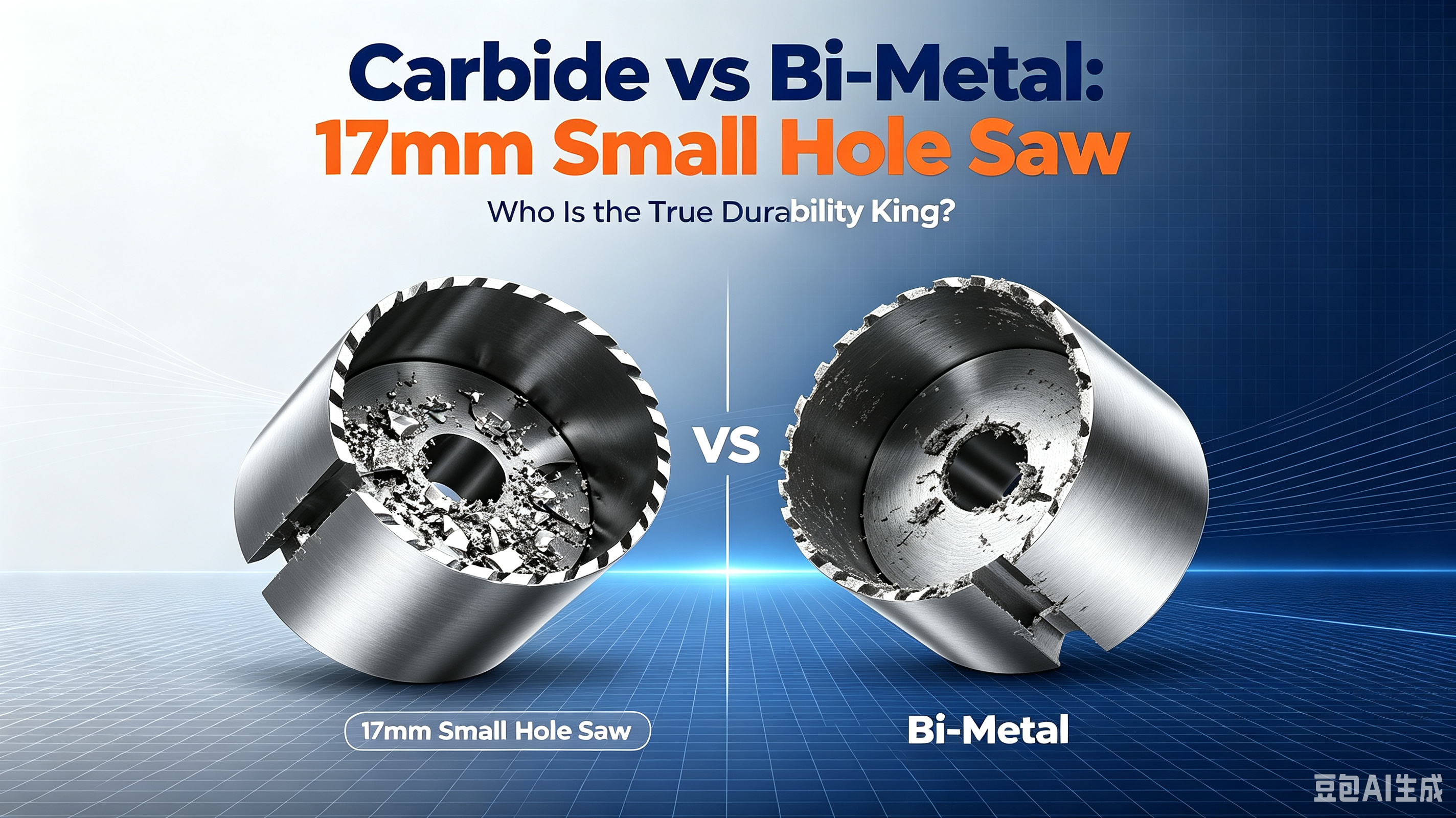
Unlike ordinary hole saws, bi-metal hole saws combine two metals: a high-speed steel (HSS) cutting edge for hardness and wear resistance, and a spring steel body for toughness and flexibility. This means they can cut through wood (even with nails), metal pipes, PVC, plastic, and more — making them the go-to choice for electricians, plumbers, carpenters, and serious DIYers.
So how do you choose the right one for 2026? What specs actually matter? Are the pricier brands really worth it? This guide will walk you through everything you need to know to make the right call.
1. Why Choose a Bi-Metal Hole Saw Kit?
The biggest advantage of bi-metal hole saws is their versatility:
-
Cut a wide range of materials: wood, plywood, drywall, PVC, copper pipes, steel, cast iron, and even nail-embedded wood.
-
Last longer than carbon steel blades, thanks to the M42 or M51 high-speed steel containing 5–8% cobalt, which keeps the teeth sharp even under high friction and heat.
-
Shock-resistant: the spring steel body absorbs vibration and impact, so the saw won't shatter or deform under heavy use.
Buying a kit rather than individual pieces makes even more sense: you get multiple sizes, center drills, adapters, and a storage case all in one go, saving you trips to the hardware store for the exact size you need.
2. Key Specs to Look For
When comparing kits, pay attention to these 5 parameters:
① Size range
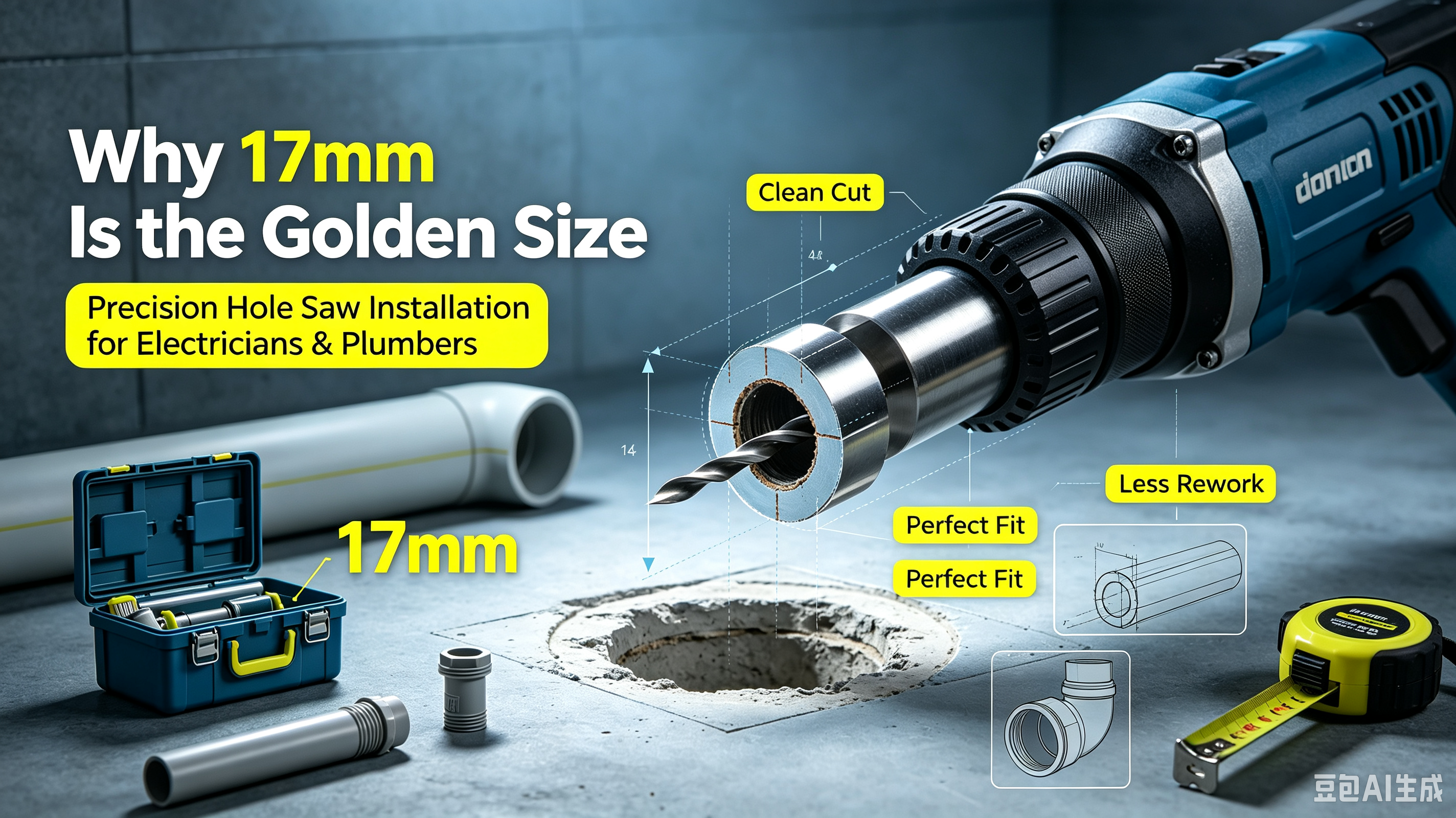
Most kits cover from 3/4" (19mm) to 4-1/2" (114mm) or more. For general household and construction use, a 11–17 piece set is usually enough. For electrical conduit work, sizes like 22mm and 29mm are essential — if your kit doesn't include them, you'll end up buying them separately anyway, which defeats the purpose of buying a kit.
② Cutting depth
Standard depth is about 1-5/8" (38mm) — enough for most materials. Some heavy-duty kits can cut up to 1-15/16" (49mm), which is useful for thicker timbers or insulation panels.
③ Tooth design
Variable tooth pitch (VTP) and raker tooth designs reduce vibration and make cutting smoother across different material thicknesses. Tooth count matters too: lower TPI (e.g., 4–6) is better for wood and soft materials — faster cut with larger chips; higher TPI (e.g., 8–10) gives a finer finish and works better on metal.
④ Arbor compatibility
Make sure the arbor (the shaft that connects the saw to your drill) fits your power tool. Common thread sizes are 1/2"-20 and 5/8"-18. Some kits come with a universal arbor that fits most drills, while others require you to buy the arbor separately.
⑤ Ejection system
A good quick-release or ejection system makes a huge difference. Brands like Milwaukee and Morse have push-out or knockout designs that let you pop the cut plug out easily — so you're not wrestling with a stuck slug. For smaller kits where plugs are less likely to jam, this matters less, but the latest reviews show even compact kits are adopting self-ejecting designs — it's becoming a standard worth looking for.
3. Brand Comparison: Which Kit Should You Buy?
| Brand | Model/Pieces | Key Features | Best For | Price Range (Amazon) |
|---|---|---|---|---|
| Milwaukee | Hole Dozer (15–21 pcs) | Raker tooth design, carbide-tipped variants available, universal arbor with quick-change | Pros, heavy users | $$$$ (High) |
| DEWALT | 21-piece kit | ToughCase storage, 3.5 TPI for fast metal cutting, plug jack for easy slug removal | Electricians, plumbers | $$$ (Medium-High) |
| Morse | 17-piece kit | M42 bi-metal (8% cobalt), 49mm cutting depth, split-point center drill for precision | Industrial, heavy-duty drilling | $$$ (Medium-High) |
| Bosch | 17-piece kit | 4–6 variable TPI, carbide-tipped options in the lineup, durable case | General contracting | $$$ (Medium-High) |
| HYCHIKA | 17-piece kit | M42 bi-metal, sizes from 19mm to 76mm (11 sizes), universal arbor + center drills, portable case | DIYers, home users, budget-conscious buyers | $ (Low) |
| Klein Tools | 13-piece kit | Dual-carbide teeth, cuts through metal studs and heavy-gauge steel | Electricians | $$$ (Medium-High) |
4. Detailed Reviews of Top Kits for 2026
Milwaukee Hole Dozer Kit
Milwaukee is known for durability. The raker tooth design keeps the saw from bogging down in deep cuts, and the carbide-tipped versions are nearly indestructible on metal. The quick-change arbor is a time-saver on job sites.
Pros: Built like a tank; smooth cutting; quick-change arbor works great.
Cons: Pricey; if you're not a daily user, it might be overkill.
DEWALT 21-Piece Kit
DEWALT's kit is a solid all-rounder. The 3.5 TPI design is optimized for metal cutting, and the plug jack makes removing slugs easy. The ToughCase keeps everything organized, and the kit covers most sizes you'll need for electrical and plumbing work.
Pros: Good price-to-performance; covers a wide range of sizes; easy slug removal.
Cons: The case is a bit bulky; center drills can wear out quickly on harder materials.
Morse 17-Piece Kit
Morse is a legacy brand in hole saws. Their M42 bi-metal (8% cobalt) is tougher than standard M2 steel, and the 49mm cutting depth gives you more room for thick materials. The split-point center drill reduces walking and makes starting holes more accurate.
Pros: Deep cutting depth; M42 material is top-tier; industrial-grade durability.
Cons: On the expensive side; not a great fit for light DIY use.
HYCHIKA 17-Piece Kit
If you're looking for value without sacrificing core quality, HYCHIKA's kit is a compelling option. It uses M42 bi-metal, covers 11 sizes from 19mm to 76mm, and comes with a universal arbor, two center drills, and a durable case. Priced under $25, it's aimed directly at home users and DIYers who want a reliable kit without breaking the bank.
Pros: Excellent value; covers the most common sizes; M42 material at entry-level price.
Cons: Not for heavy daily pro use; cutting depth is standard (38mm) rather than extended.
Klein Tools 13-Piece Kit
Klein is well-regarded among electricians. Their dual-carbide teeth handle metal studs and conduit with ease, and the kit is compact enough to fit in a tool bag.
Pros: Excellent on metal; compact case; long tooth life.
Cons: Limited to 13 pieces; not as versatile for wood cutting as others.
5. Which One Should You Choose?
-
If you're a pro (electrician/plumber/contractor): Milwaukee or DEWALT are both solid choices. They'll handle daily abuse and deliver consistent results. If you're cutting a lot of thick metal, the Morse kit is also worth the higher price.
-
If you're a serious DIYer or weekend warrior: The HYCHIKA 17-piece kit is a genuinely good option at a fraction of the price. It covers all the standard sizes, uses M42 material, and is backed by strong Amazon ratings for its price bracket. It won't hold up to daily pro use, but for occasional projects, it's more than enough.
-
If you're an electrician: Klein's compact dual-carbide kit is worth a look, especially if you're cutting metal studs and conduit regularly.
6. Tips for Buying a Bi-Metal Hole Saw Kit
-
Don't overbuy: A 17-piece kit covers most standard sizes. Large kits (over 25 pieces) often include sizes you'll rarely use — and you end up paying for them.
-
Check the arbor: Make sure your drill's chuck is compatible. If you have both corded and cordless drills, a universal arbor with a quick-change feature can be handy.
-
Look for M42 over M2: Most budget kits use M2 steel (5% cobalt). M42 (8% cobalt) stays sharp longer and handles heat better. It's worth paying a few extra dollars for.
-
Read the fine print on cutting depth: Some kits list a depth that includes the center drill's protrusion — the actual effective depth is often shallower. Look at the spec sheet carefully.
Conclusion
A good bi-metal hole saw kit is one of those tool investments that pays off every time you use it — especially when you hit a nail or need to cut through metal without a separate tool.
If you're a professional, Milwaukee and DEWALT are the clear front-runners. If you're a DIYer or occasional user, don't sleep on the HYCHIKA 17-piece kit — at around $25, it's a low-risk way to get a quality M42 kit that covers all the common sizes, with enough performance to handle most home and workshop projects.
Final advice: Start with a solid mid-range kit that covers the most common sizes (19mm to 76mm). If you find yourself using certain sizes more often, you can always upgrade those individual pieces later. The kit gives you the foundation; experience will tell you what else you need.