
So you just got your first spray gun. Whether you're into DIY furniture flipping, auto painting, model making, or woodworking, learning how to use a spray gun properly is a game-changer. But where do you start?
This beginner's guide to spray guns walks you through everything — from unboxing your new tool to spraying your first smooth, professional-looking coat of paint.
Let's dive in.
1. Unboxing Your Spray Gun – What's Inside?
When you open the box, you'll typically find:
Spray gun body (gravity feed is best for beginners)
Paint cup (usually 100cc–400cc)
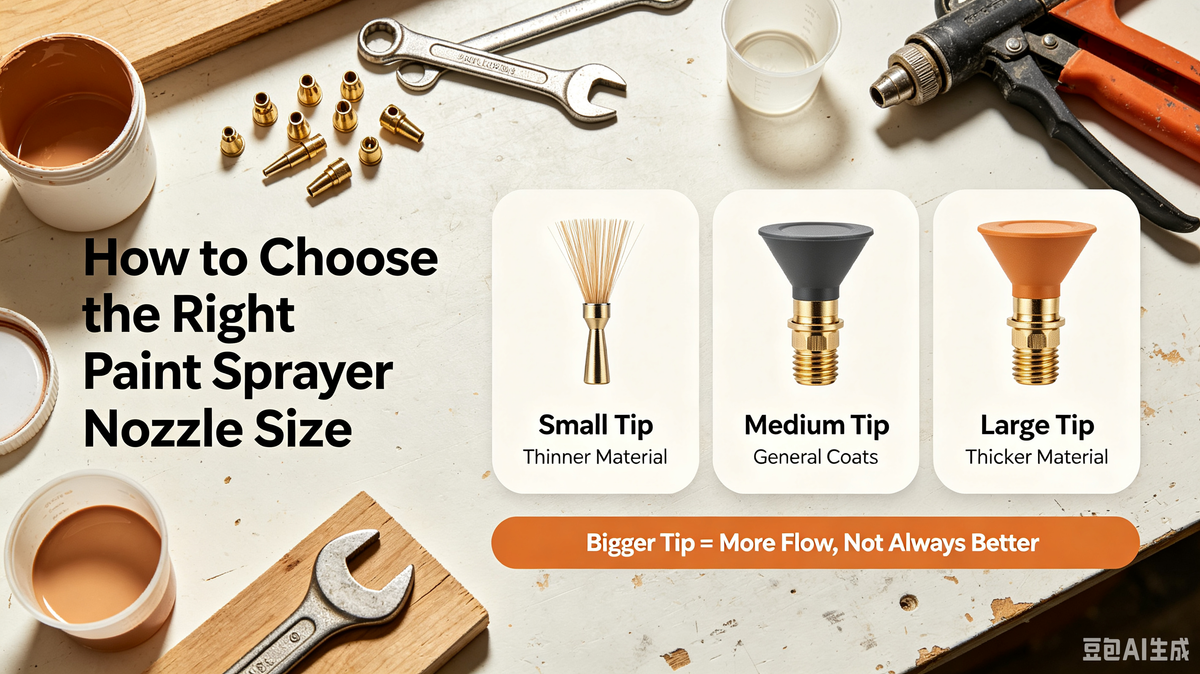
Nozzle set (often pre-installed)
Cleaning brush and small wrench
User manual (keep it handy)
Take a few minutes to hold the spray gun, squeeze the trigger gently, and locate the three main adjustment knobs (fluid, fan pattern, and air).
2. Essential Spray Gun Equipment for Beginners
A spray gun alone won't work. You'll need a basic spray painting setup:
Air compressor (at least 7–10 liters with a tank)
Air regulator with water separator (critical for clean, dry air)
Air hose with 1/4" quick connector
Paint suitable for your project
Thinner or reducer (most paints need thinning)
Safety gear (respirator mask, gloves, good ventilation)
✅ Pro tip: Don't skip the water separator. Moisture in your air lines will ruin your paint job.
3. How to Set Up Your Spray Gun for the First Time
Connect the air supply:
Attach the air hose to your compressor and spray gun.
Turn on the compressor and set the pressure to 2–2.5 bar (30–35 PSI) — a good starting point for most paints.
Prepare your paint:
Mix paint and thinner according to the manufacturer's instructions.
Stir thoroughly. The ideal consistency? Like whole milk.
Strain the paint through a filter or old nylon stocking to remove lumps.
Fill the paint cup:
Fill no more than 80% full.
Attach the cup securely to the spray gun.
4. Adjusting Your Spray Gun – The 3 Controls You Must Know
Every standard spray gun has three adjustments. Here's what they do:
|
Adjustment |
Location |
Beginner Setting |
|
Fluid control |
Rear of gun |
Tighten, then open 1.5 turns |
|
Fan pattern control |
Side of air cap |
Mid setting (round to oval) |
|
Air pressure |
Regulator (not on gun) |
2 bar / 30 PSI |
5. Spray Technique – How to Get Your First Smooth Coat
Before you touch your actual project, practice on scrap material (cardboard, old wood, or paper).
The right way to spray:
Distance: 15–20 cm (6–8 inches) from the surface
Angle: Always perpendicular (90°) to the surface
Movement: Move your whole arm, not just your wrist
Trigger technique: Start spraying before the object, release after passing it
Overlap pattern:
Aim for 50% overlap between each pass. This prevents stripes and ensures even coverage.
First coat:
Apply a light tack coat (thin and slightly dry). Wait 5–10 minutes, then apply a medium wet coat.
6. Common Beginner Spray Gun Problems (And How to Fix Them)
|
Problem |
Likely Cause |
Solution |
|
No paint coming out |
Paint too thick or clogged nozzle |
Thin paint more; clean nozzle |
|
Splattering or spitting |
Loose nozzle or dirty air cap |
Tighten and clean |
|
Runs or sags |
Too much paint or moving too slow |
Reduce fluid; move faster |
|
Orange peel texture |
Wrong distance or pressure |
Adjust to 15–20 cm; increase pressure slightly |
|
Dry, grainy finish |
Paint drying before hitting surface |
Move closer or reduce air pressure |
7. How to Clean Your Spray Gun (Don't Skip This!)
Cleaning your spray gun immediately after use is not optional — it determines how long your tool lasts and how well it performs next time.
Fast cleaning steps:
Pour out leftover paint (don't pour back into the can).
Rinse the paint cup with thinner or water (depending on paint type).
Spray thinner through the gun until it runs clear.
Remove the nozzle, air cap, and fluid tip. Clean with a brush.
Wipe everything dry and reassemble.
Give one final blast of air to clear internal passages.
❌ Never soak the entire spray gun in thinner. It damages seals and o-rings.
8. Spray Gun FAQs for Beginners
Q: What type of spray gun is best for a beginner?
A: A gravity feed HVLP spray gun is the most forgiving and efficient for small to medium projects.
Q: Can I use a spray gun without an air compressor?
A: No — you need a compressor. Turbine systems exist, but they're less common for beginners.
Q: Why is my spray gun spitting paint?
A: Usually a loose nozzle, dirty air cap, or low paint level in the cup.
Q: How do I get a mirror-like finish?
A: Thin your paint properly, apply multiple light coats, and wet sand/polish after curing.
Final Thoughts – Your First Spray Job Awaits
Getting your first smooth, even coat of paint from a spray gun isn't luck — it's technique and preparation. Follow this spray gun beginner's guide, practice on scrap material, and don't rush the cleaning step.
Within an afternoon, you'll go from unboxing to spraying like someone who's done it for years.
Ready to start? Set up your spray gun, mix your paint, and lay down that first beautiful coat.
🚀 Start Your First Spray Painting Project the Right Way.
The HYCHIKA 600W HVLP Sprayer is the perfect beginner's gun — easy to set up, easy to clean, and forgiving enough to learn on. Everything you need is in the box.
🛒 Get the HYCHIKA 600W HVLP Sprayer Add Sealing Ring Set ($9.99) →Beginner-friendly · Easy clean-up · Includes 3 nozzle sizes & 1200ml cup